© TSUBAME ARCHITECTS


© TSUBAME ARCHITECTS

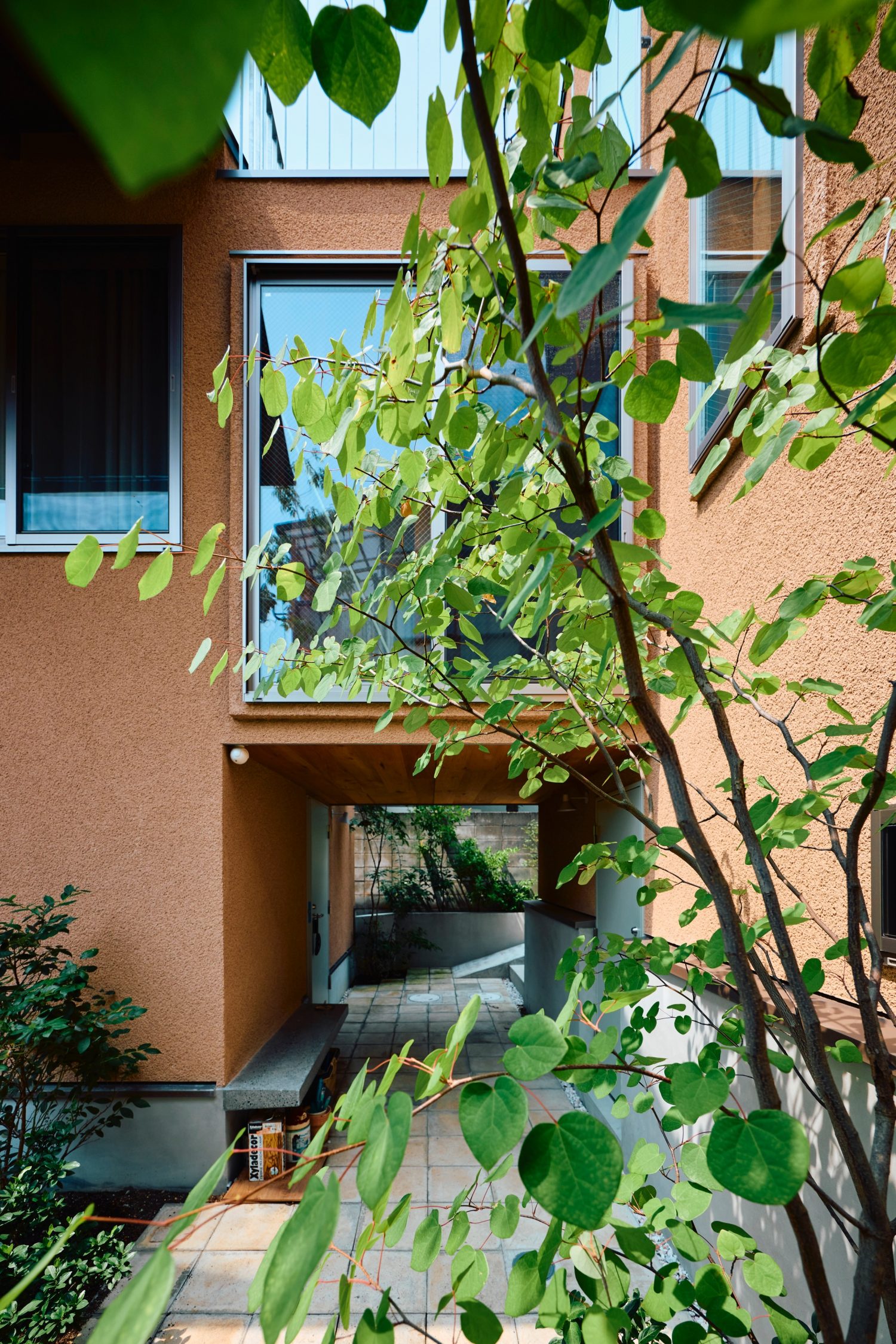
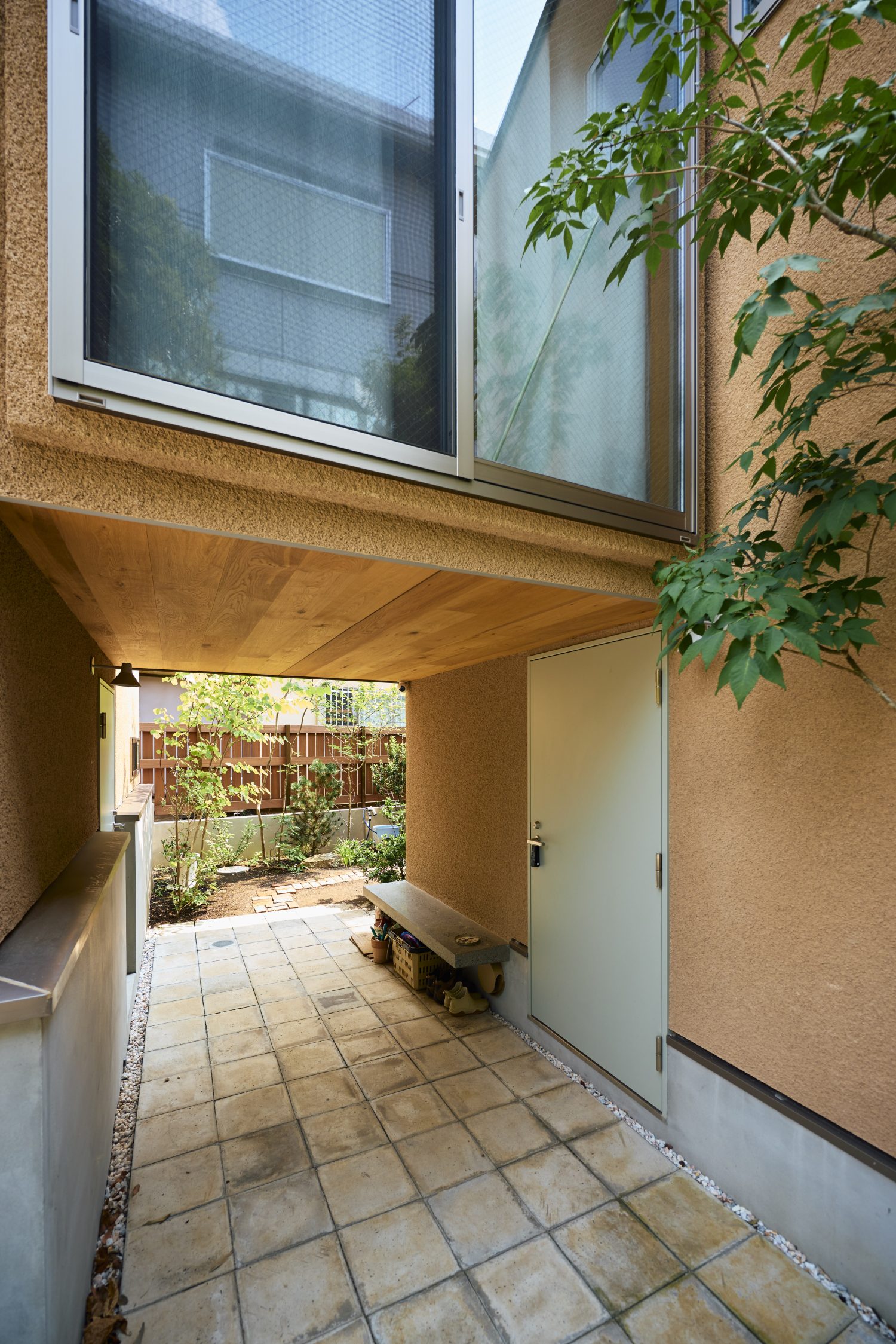
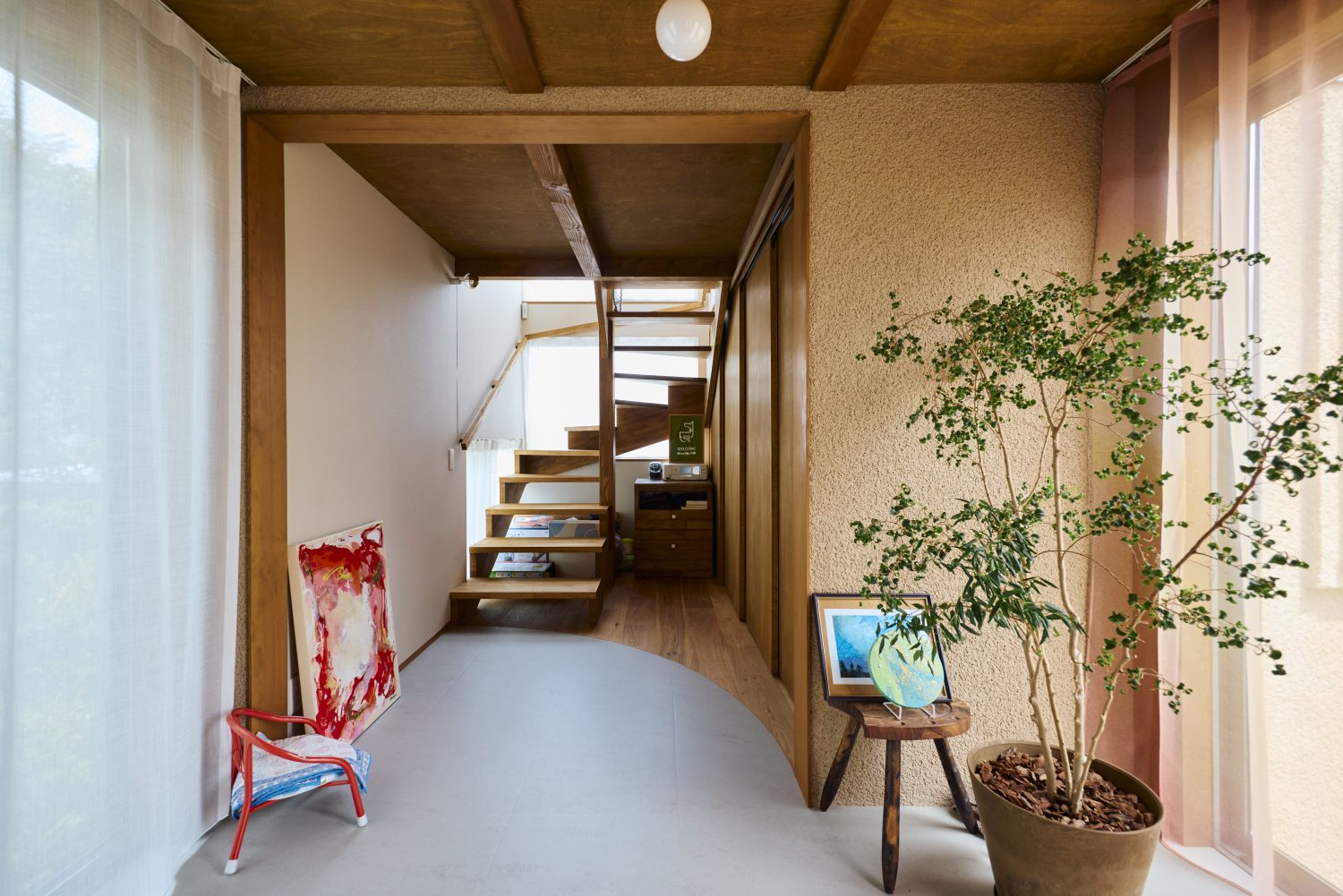


We began designing this house when the Corona disaster had settled down. At a time when we did not know how society’s assumptions would change in the future, we set out to design a house with the theme of adding a branching point to the future of the house. Ultimately, we came up with the idea of two houses with detachable bridges.
The site is relatively spacious, with two intersecting streets to the south and north.
The house is composed of two volumes, a main house and a detached house, connected by a bridge in the air. The bridge, which is formed by cantilevers from each building, can be cut off in the middle. By using the bridge as a starting point, the house can be closed, staircases can be added, or the entire bridge can be cut off, thereby widening the gap between leaving the house and destroying it. In the future, when the children leave the house, one wing can be rented out to the local youth.
In the future, when the children leave home, one of the houses can be rented out to young people in the community, a store or clinic can be built for the elderly to run themselves, two houses can be rented out to different people, one can be used as a garden for compact living, or one of the lots can be sold due to inheritance, etc. If we can draw many diverging points, the tendency of metabolism in residential areas, where buildings are torn down at once and streets are cut into small pieces, can also be shifted. If we can depict the many forks in the road, such as the sale of one side of the land without any choice but to live in a compact garden or inheritance, we may be able to shift the trend of metabolism in residential areas, where buildings are destroyed at once and streets are cut into small pieces.
The reason why we started to think about the main house and the detached house was the lifestyle of the owner’s husband, whose place of work changes every few years. The family followed him to his place of work like a circus troupe, and a house was required for the family to settle down when the children started elementary school. For the husband, who returns only half the month from his distant work location, it may feel more like an inn. Considering that grandparents who live nearby also stay there from time to time, the house is meant to be a place where the occupants change considerably at different times. The configuration of the main house and the detached house, connected by a bridge, allows for a good sense of distance between the various memberships. For this reason, we are trying to create a variety of qualities in each location. The main house has an open window like a hall and a garden to the east, while the detached house is buried in the ground and extends like a tower with a narrow window.
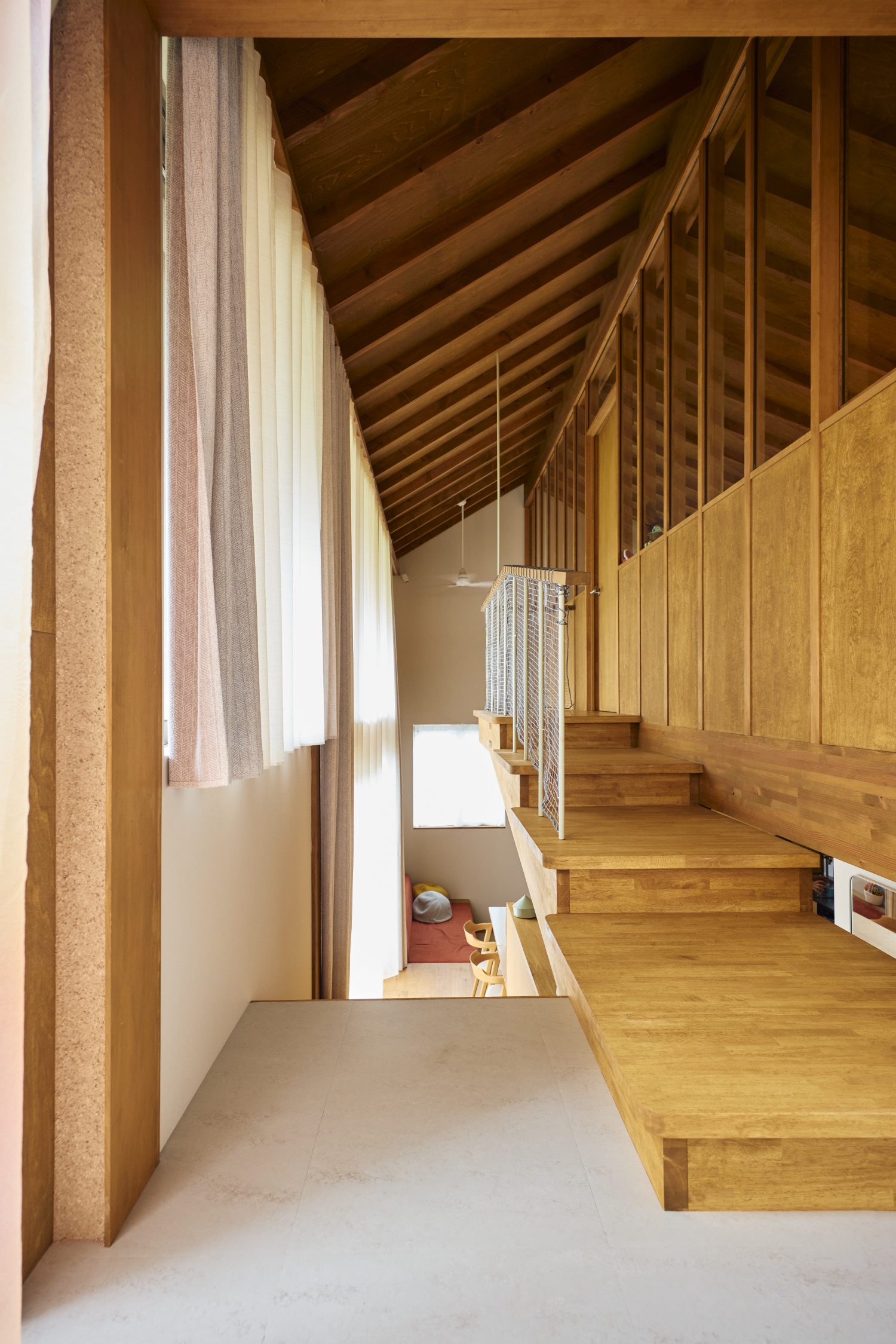
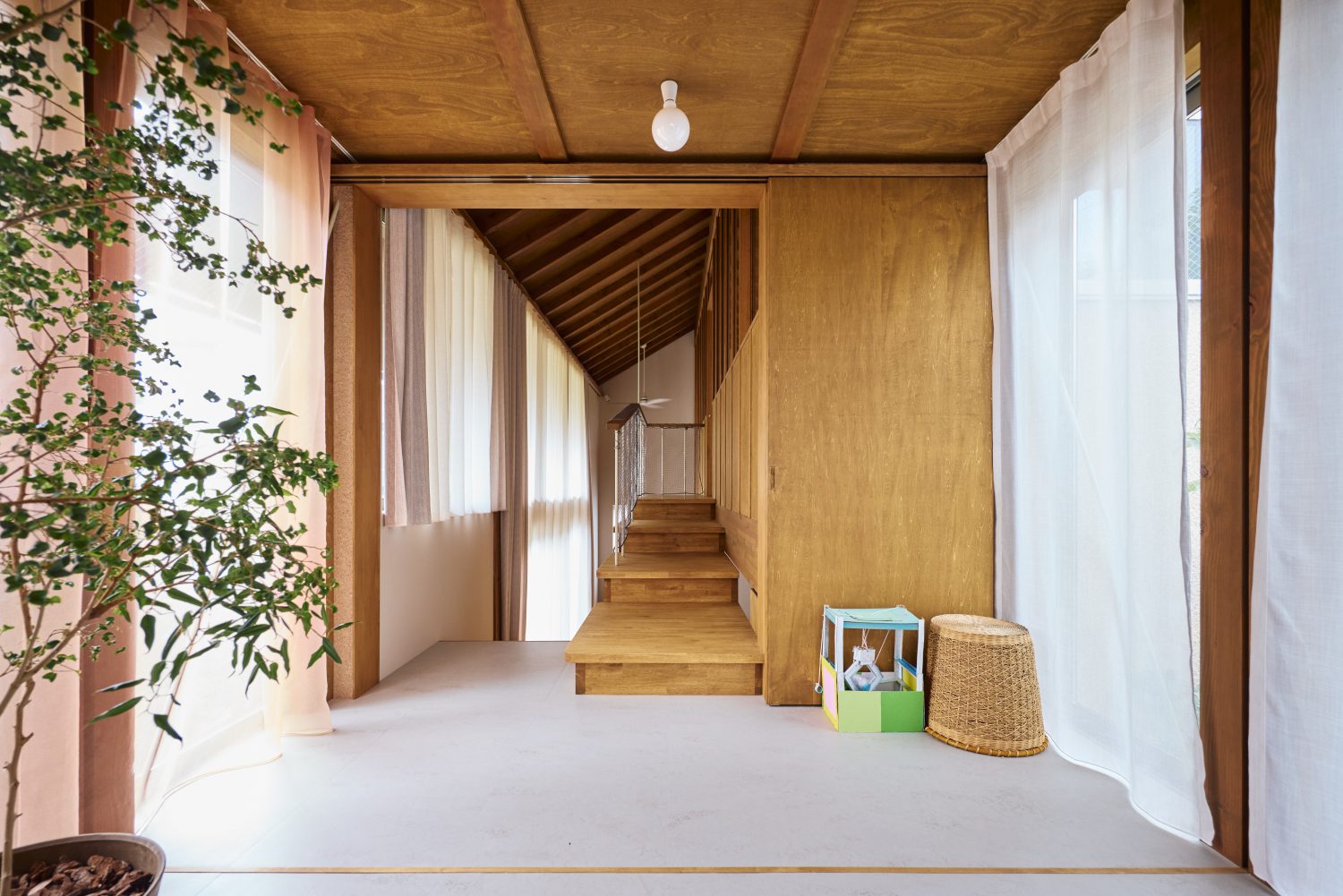
Furthermore, the floor plans and facilities that were added to the overall composition to accommodate lifestyles were mostly “tentative” at the time of the commission, so some of the elements placed inside the two buildings are movable and temporary. The second floor of the main house, which is likely to be used as a child’s room for a while, has walls like pillars that can be reorganized. In order to leave some flexibility in the way it is divided, the staircase in the atrium is suspended from the ceiling to reach the center of the second floor of the main house, and appears in the atrium as if it were an extension of the bridge. The bridge has no walls, but rather sliding doors, which evoke other uses in combination with the surrounding area. The bridge is as spacious as a room, and when the windows are open, it becomes an inner balcony; when the windows are closed, it becomes a children’s playground connected to the second floor of the main building; when the sliding doors are closed, it becomes an online workspace; and when the sliding doors on the south side are closed and the bedroom door is opened, it becomes an extension of the bedroom. It is being used in a delightful way.
The meta-issues of the city and architecture, and the more conventional desires of the owner’s lifestyle and tastes, do not necessarily precede each other, but if we can bridge them, edit the time axis that flows through each category, and occasionally open up the daily cycle, architecture becomes a sustainable and flexible entity. I believe that this will lead to the richness of the house as it is lived in the present.
Location:Tokyo
Category:House
Structure:Timber frame(2 stories)
Design:Tsubame Architects
Structure design:Ohno Japan
Landscape desgin:En Landscape Design
Construction:Sanryo Construction Firm
Completion:2024.9
Session:Around Architecture(Real Estate Consulting)
photo:shinkenchiku-sha
published:Shinkenchiku Jūtakutokushū, January 2024 issue