© TSUBAME ARCHITECTS


© TSUBAME ARCHITECTS
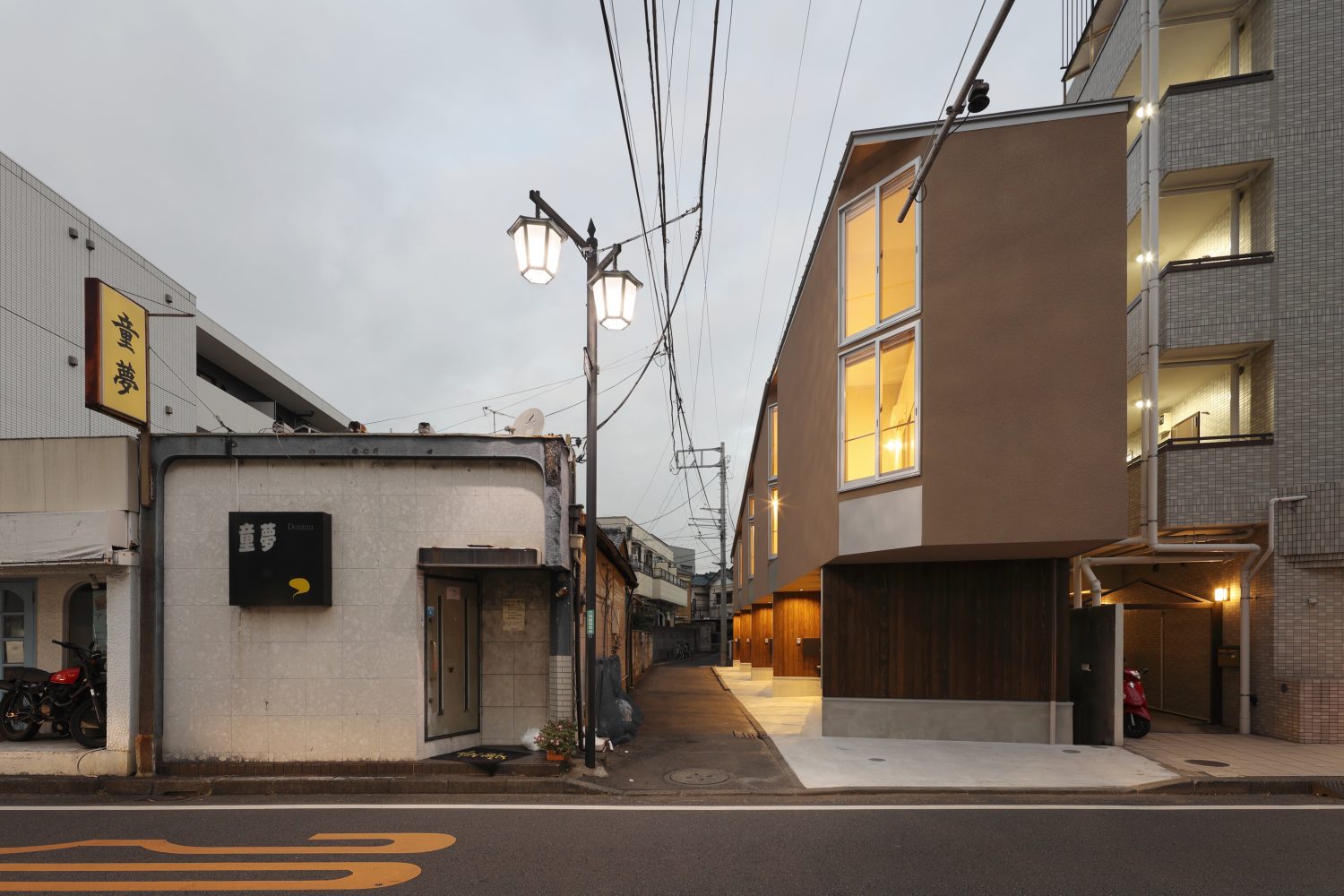
The train station serving the Rokkakubashi neighborhood opens directly onto a shopping district that features a wooden arcade called the Fureai Dori. Originally a post-war black market, the passage runs between densely packed wooden nagaya (rowhouses) and is filled with people and things. Beyond the shopping district, the streets merge into a school route that is also lined with active nagaya. The nagaya of Rokkakubashi bring proactive lifestyles into view and create places where people can gather within the residential neighborhood.
However, there are various problems with old nagaya, especially when it comes to fire safety, sound insulation, seismic resistance, thermal insulation, and daylighting. For example, their designs typically give priority to providing each housing unit with equal frontage on the first story, often at the sacrifice of the lighting conditions on the second story. In fact, almost nobody lives on the second stories of the nagaya along Rokkakubashi’s bustling arcade. There is also the problem of what happens when nagaya shops are not actively used or go out of business. Once the shops permanently close, nagaya tend to either be left shuttered or replaced with new apartment buildings whose street-level balconies are usually equipped with privacy screens. Both scenarios result in buildings covering up their faces along the streets.
Wanting to explore a better future for this neighborhood, we decided to simultaneously develop mid- to long-term plans for multiple sites in the area as one of our Lab projects. It appeared that we could begin working on one of the sites right away, so we began developing a concrete plan with the aim of presenting a new kind of nagaya for tomorrow.
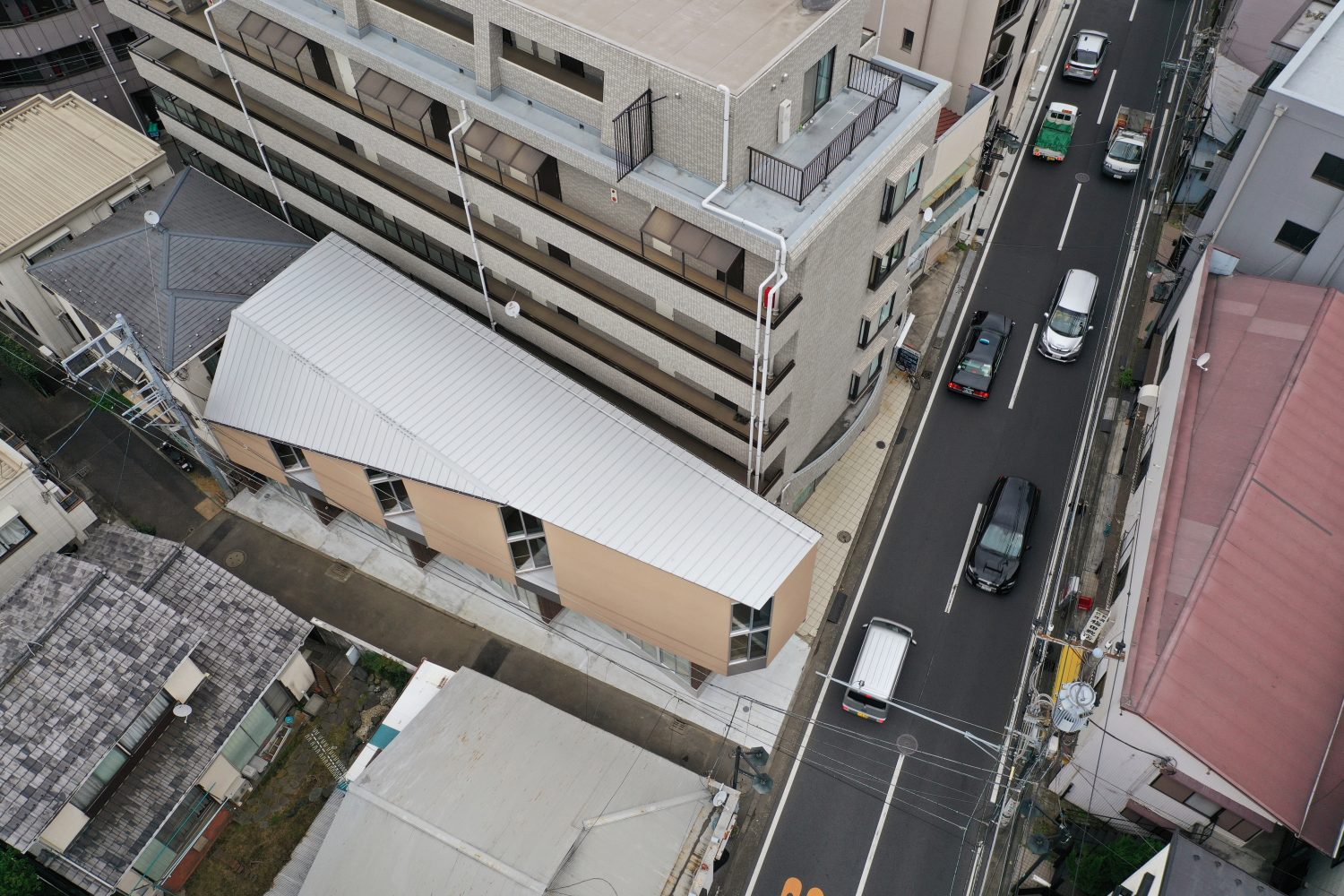
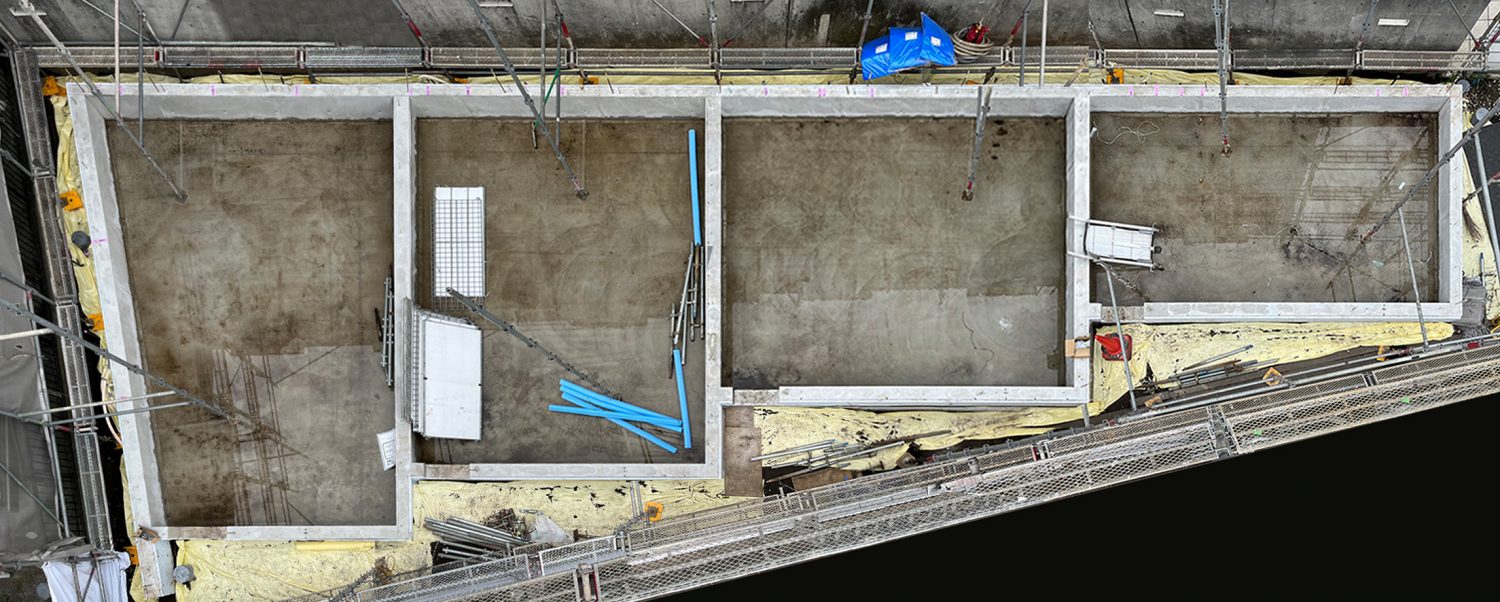
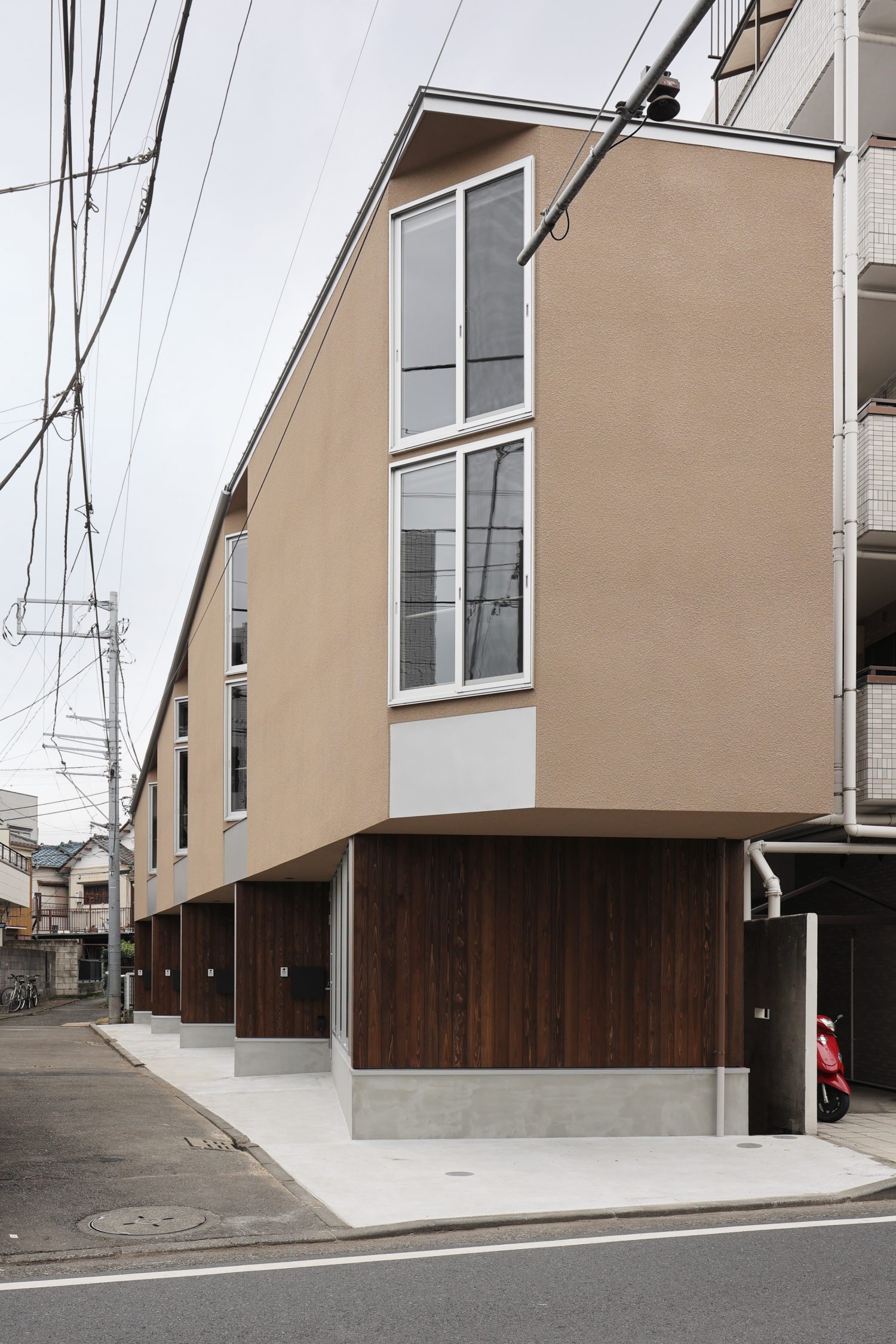
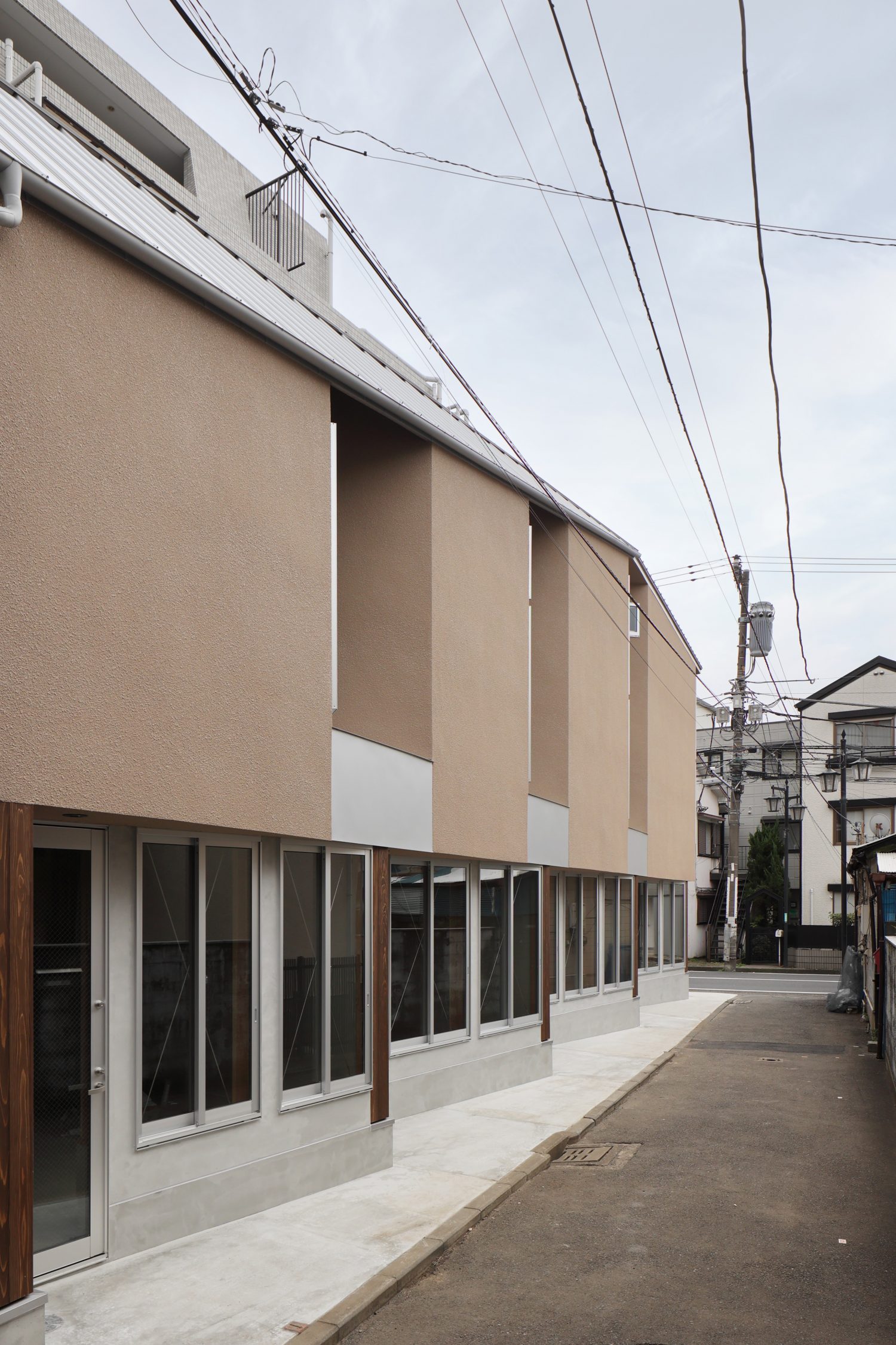
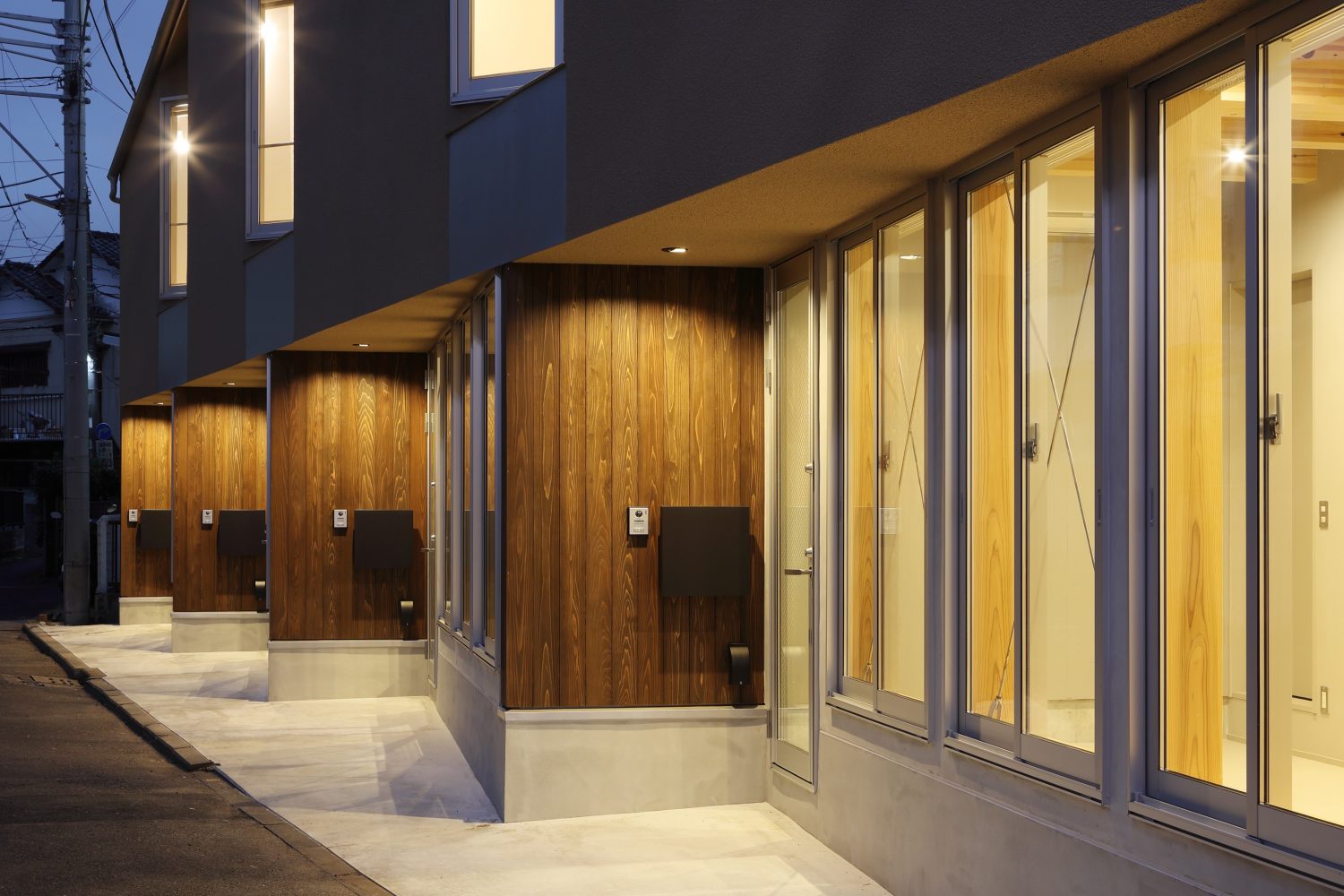
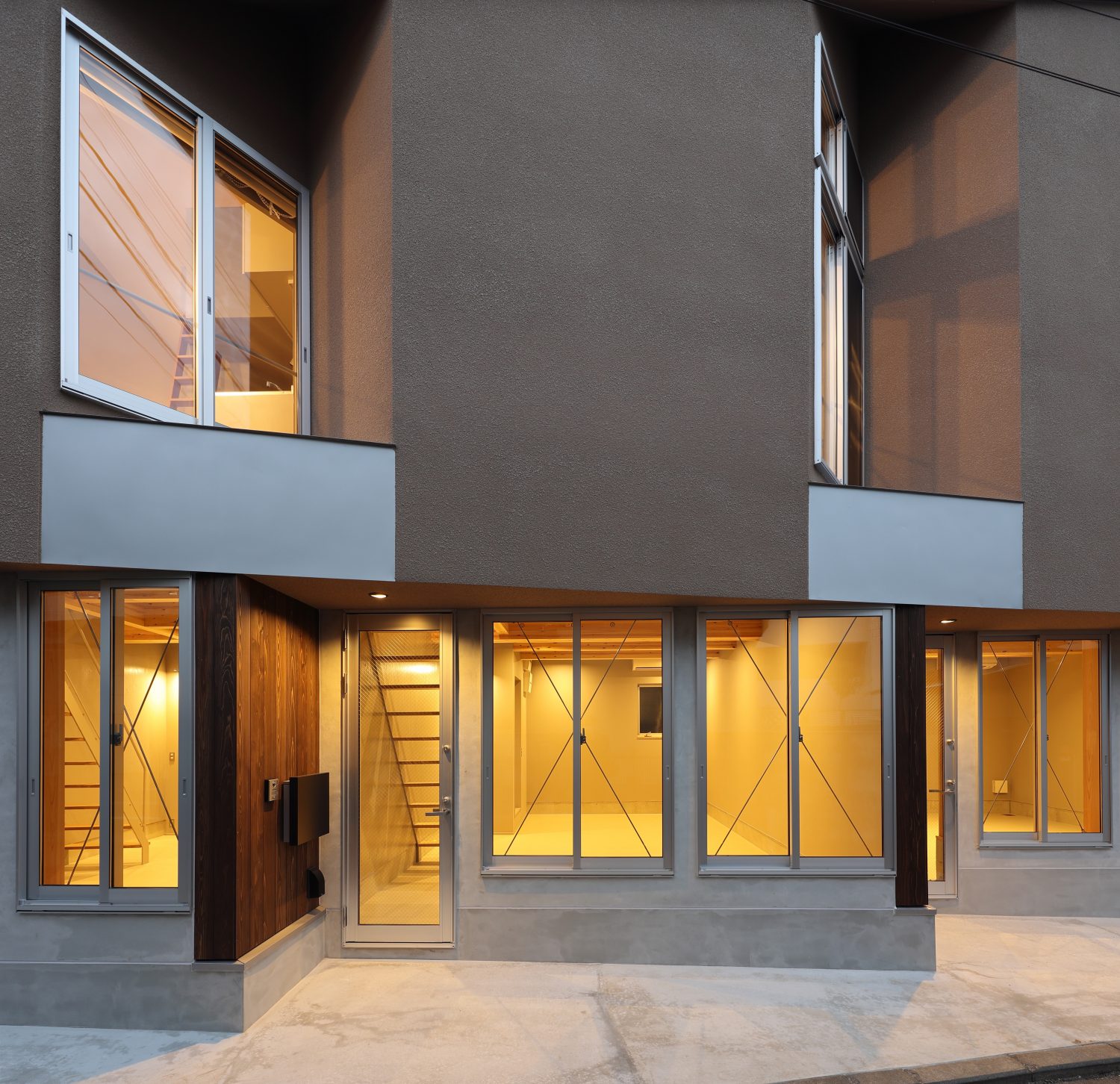
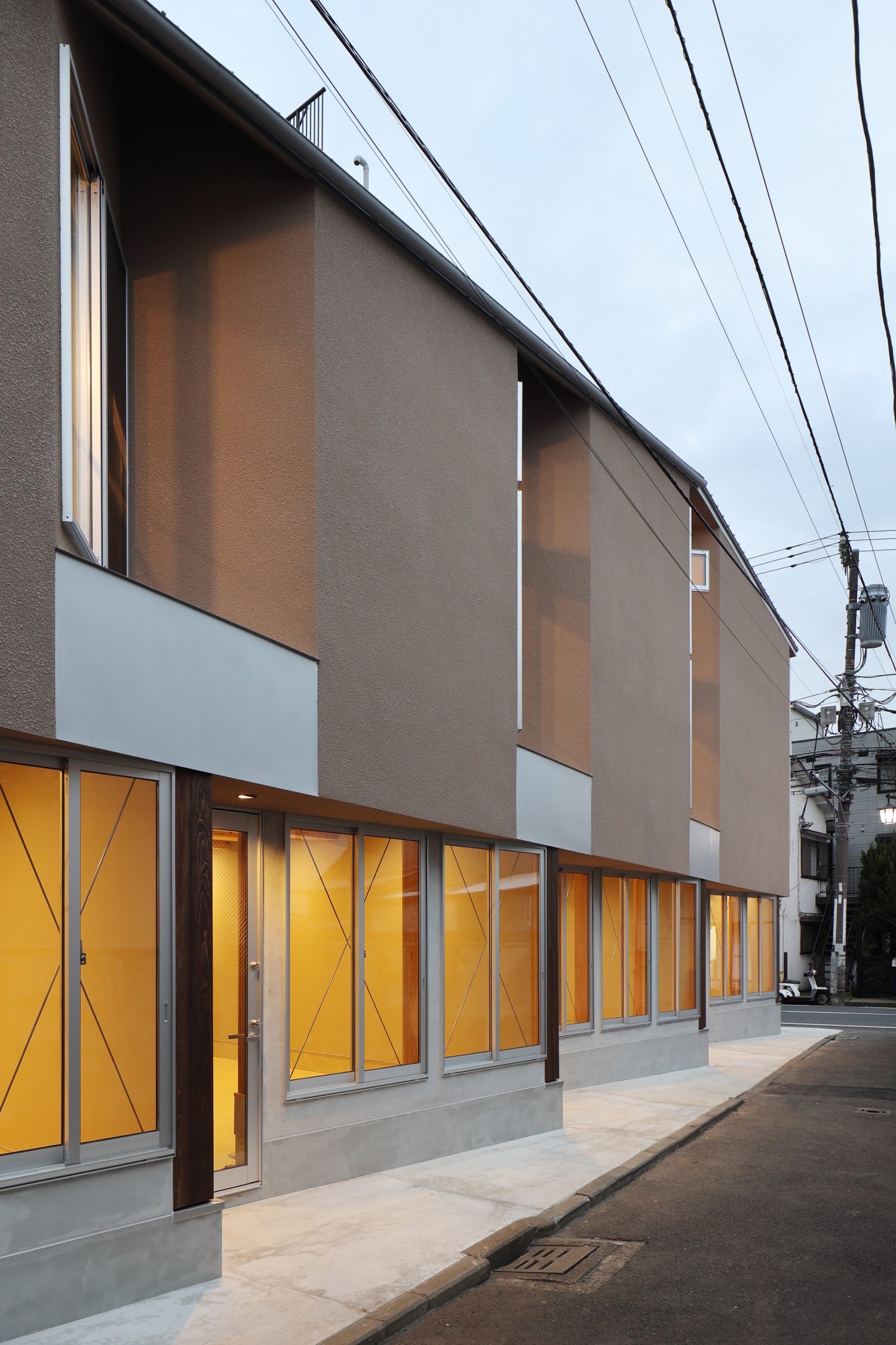
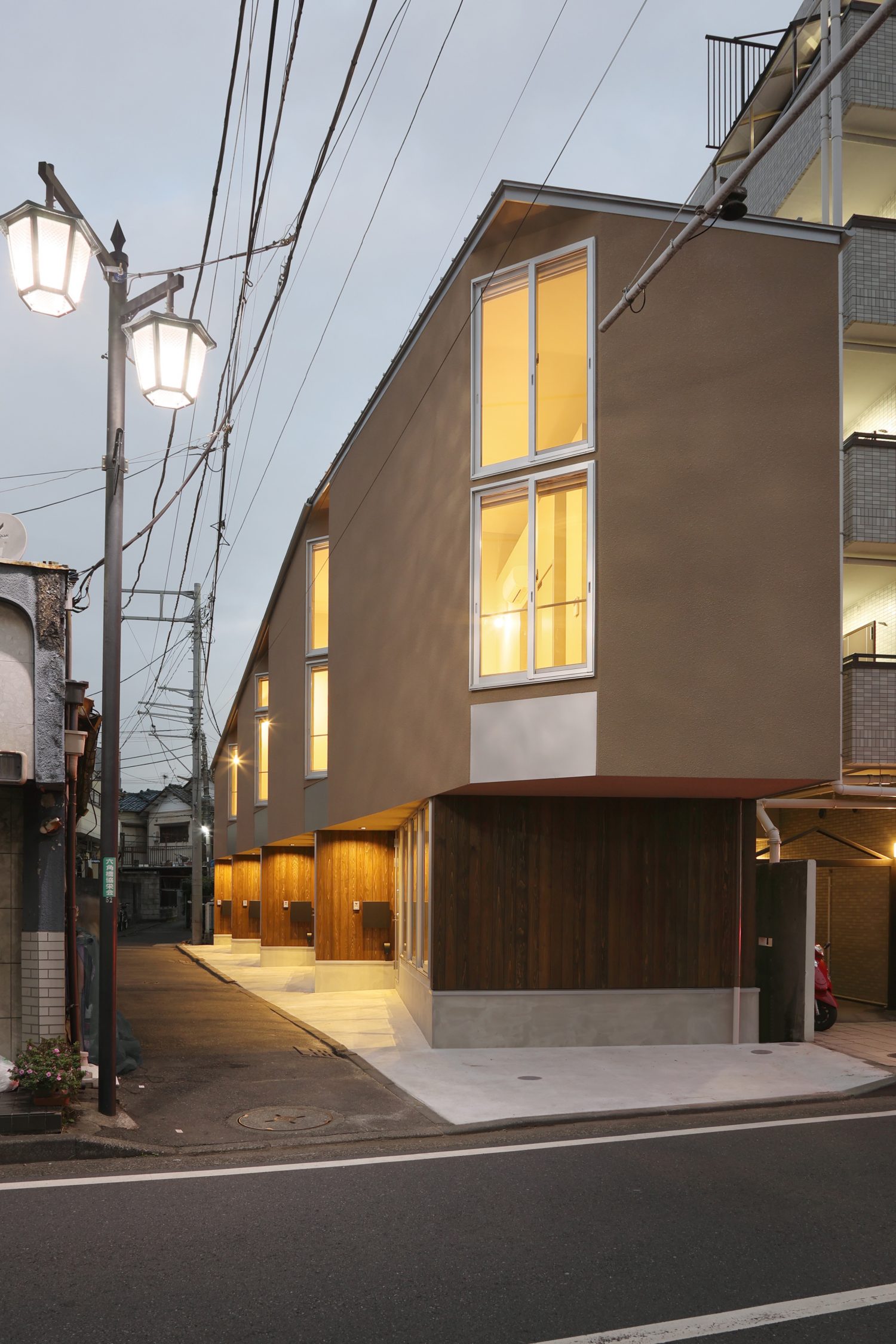
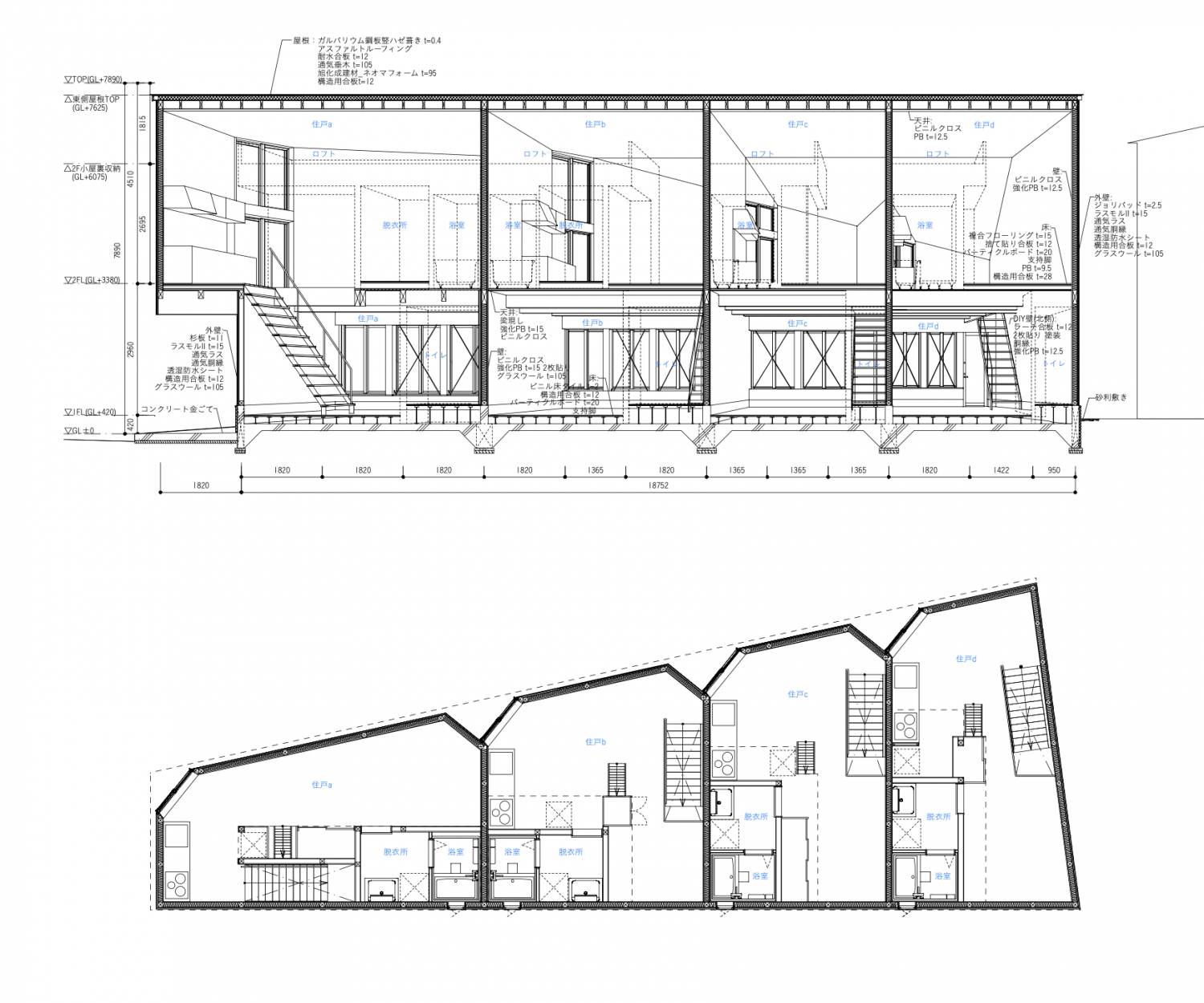
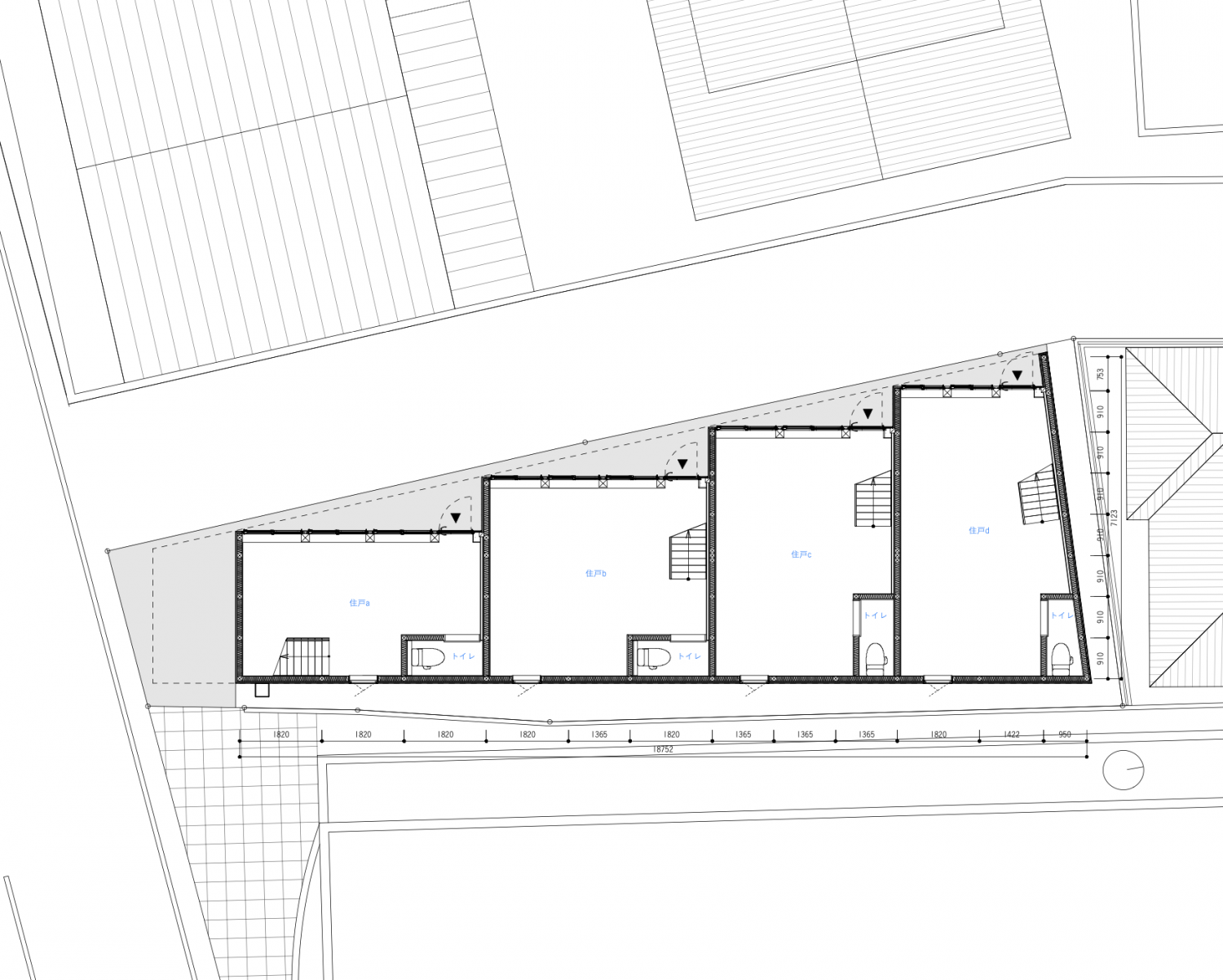
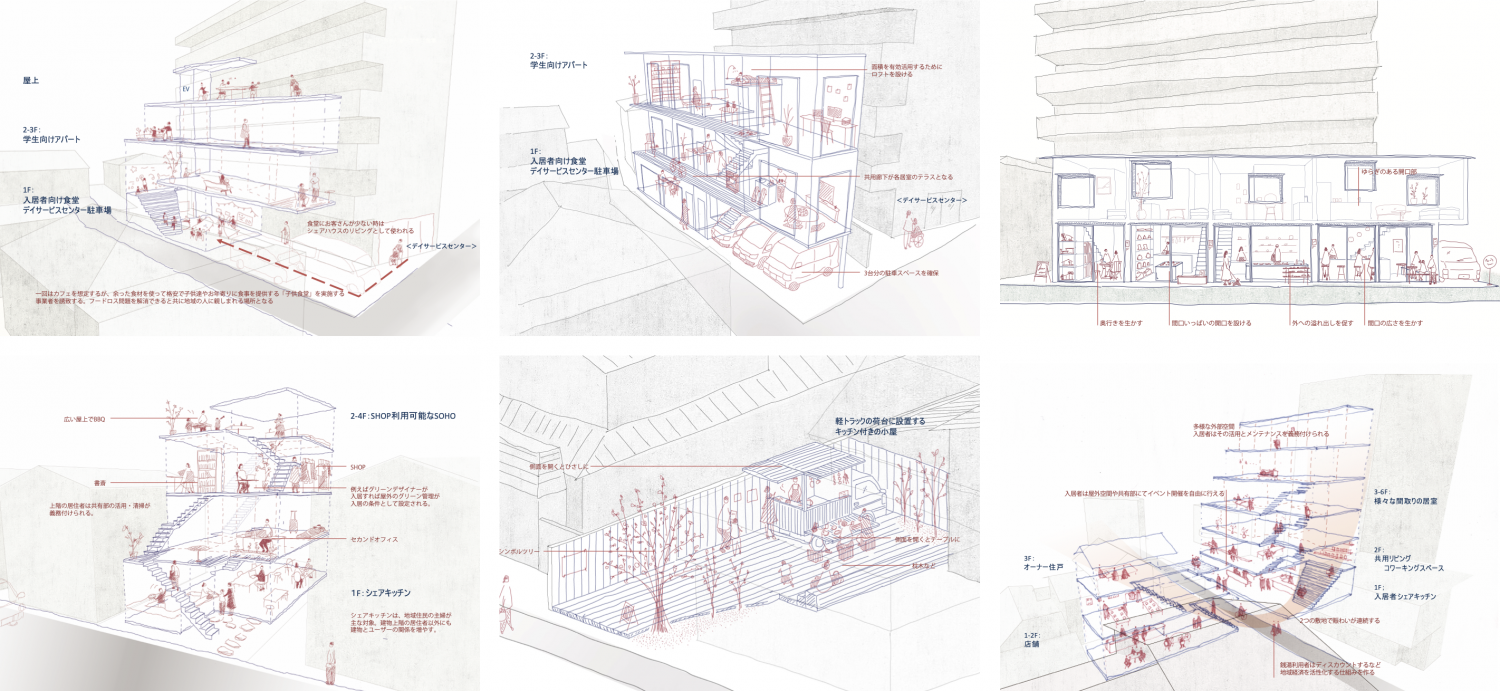
Because the site is triangular, we decided to give all the units the same floor area instead of the same frontage. This simple rule allowed us to create units of varied types, ranging from wide and shallow units to narrow and deep units. The roof that we folded down to clear the setback line also contributes to ascribing each unit with individuality. We believe that providing variety will help attract diverse users who can develop ways of utilizing the spaces as neither fully a home nor fully a shop. Since the site extends perpendicularly from the main street, we designed the first story with staggered walls that reorient the building towards the street while also adding a sense of depth to the façade. We designated these walls as DIY walls both on the exterior and interior, and provided empty spaces beneath the overhangs of the second story to accommodate the overspill of objects such as potted plants and benches.
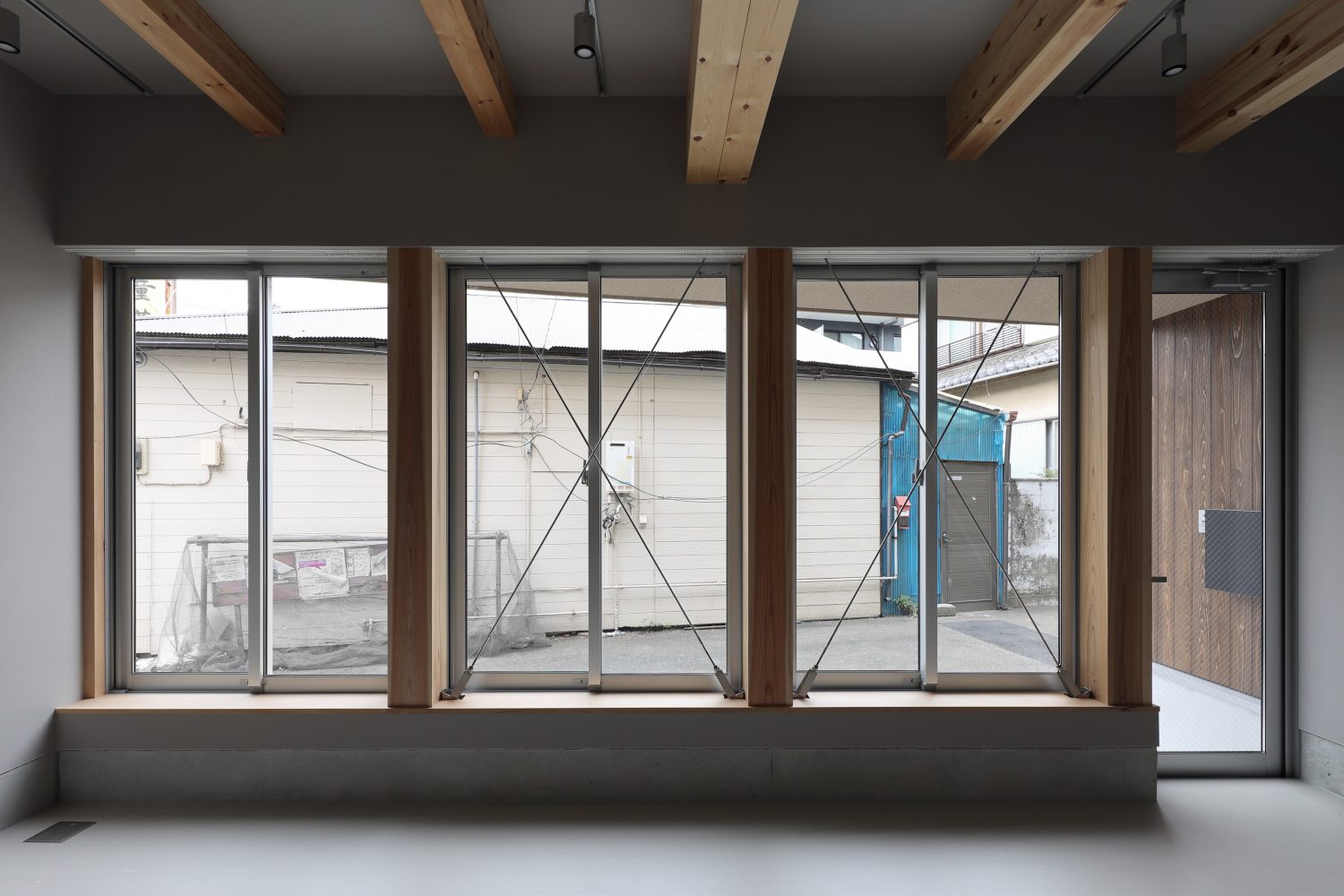
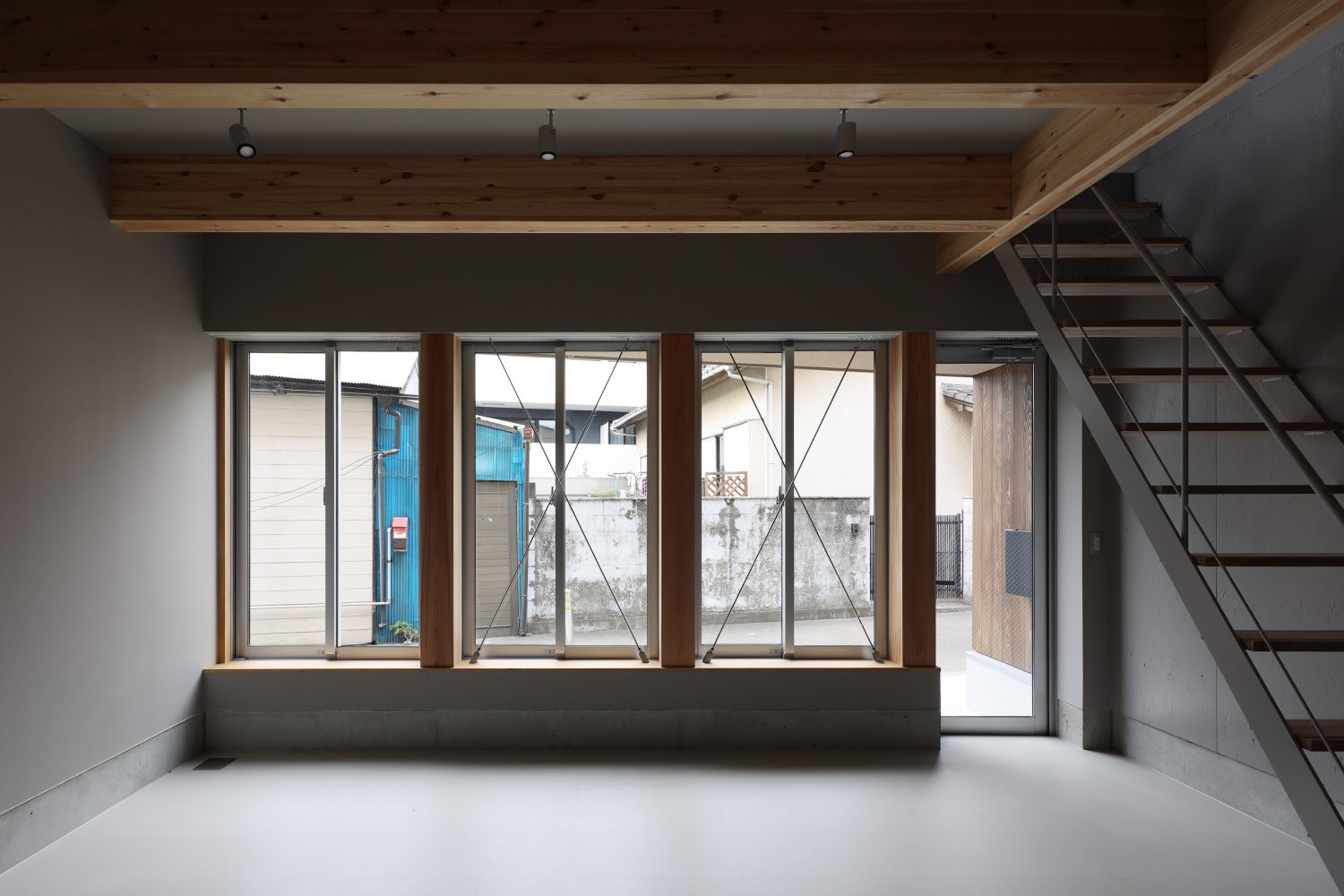
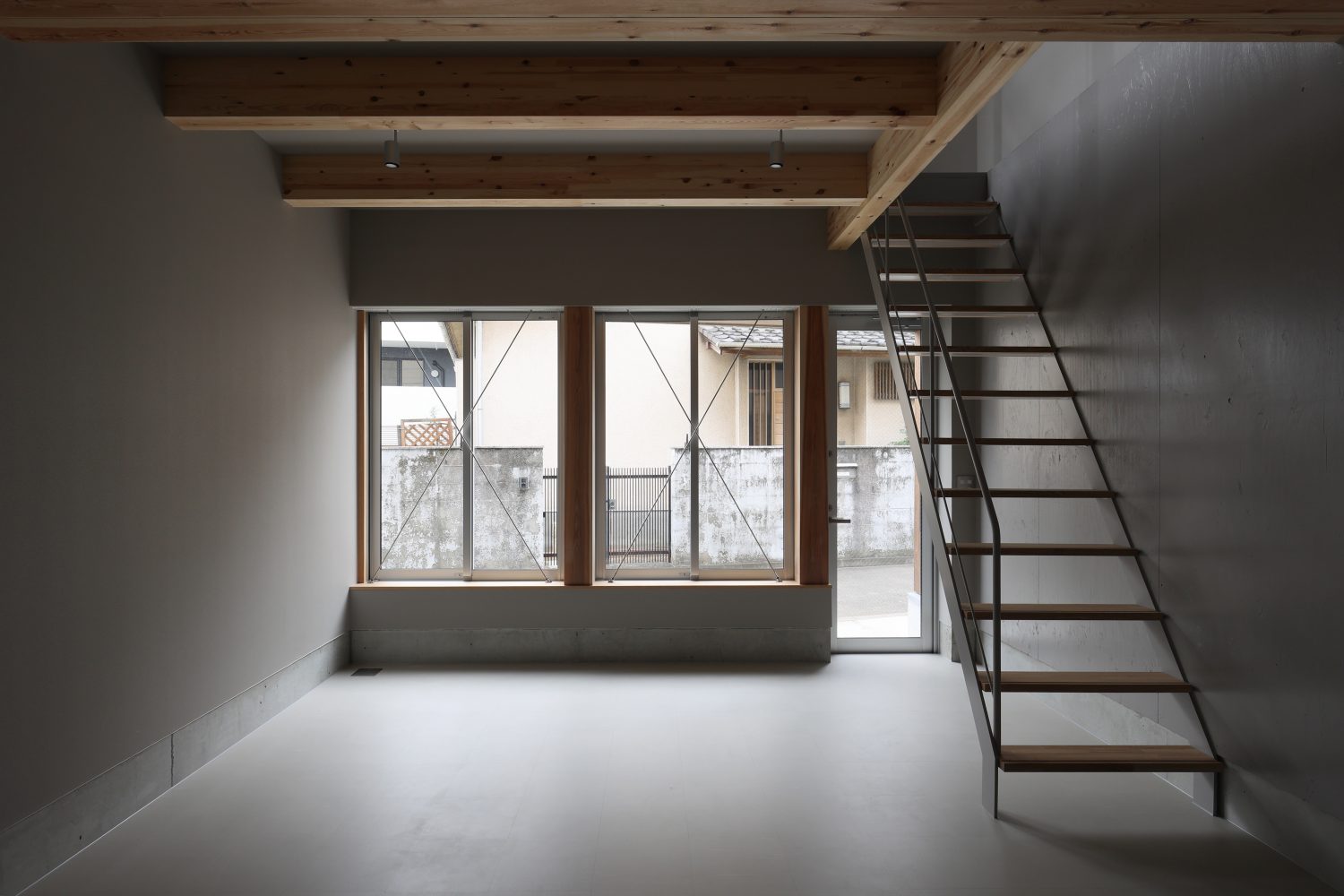
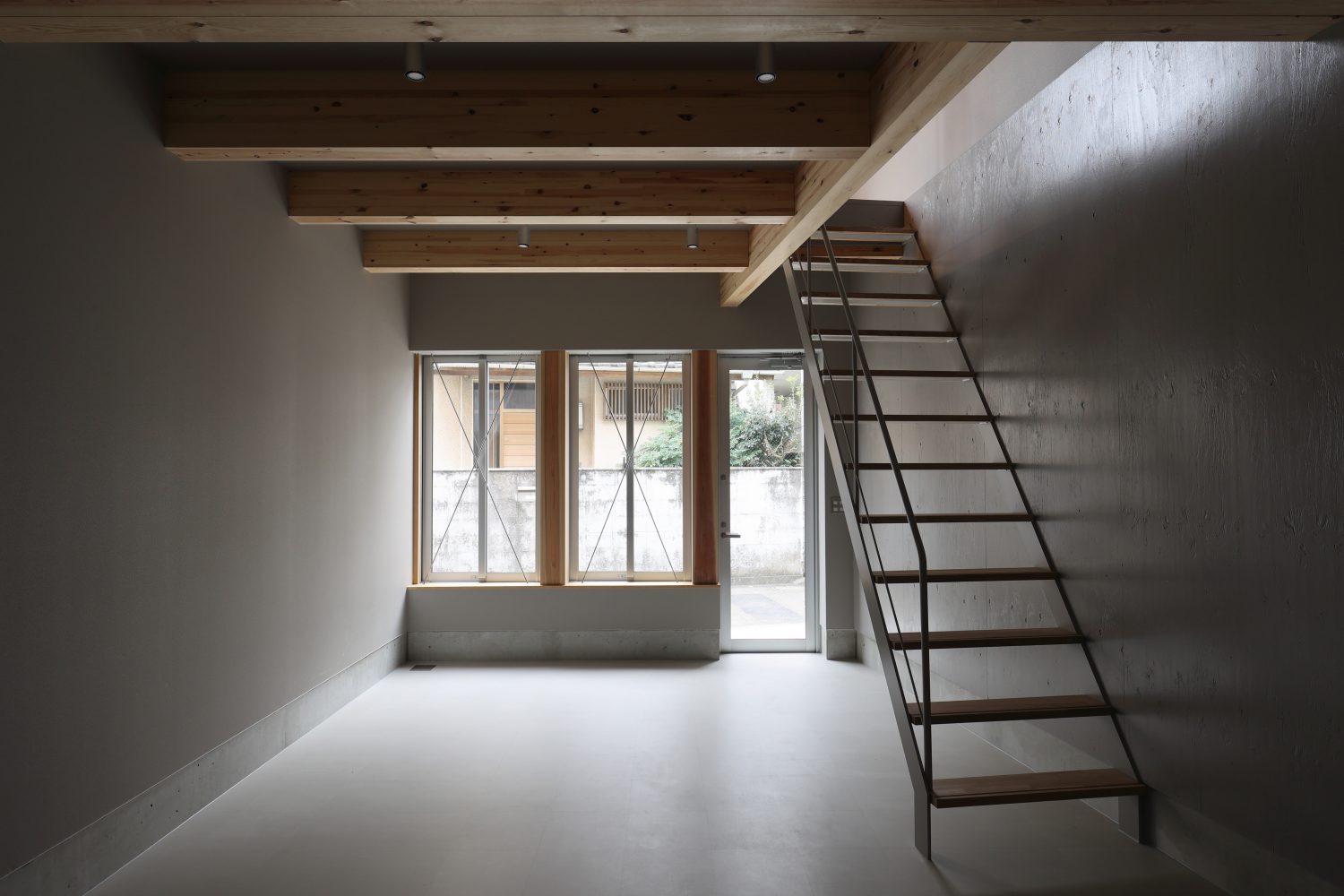
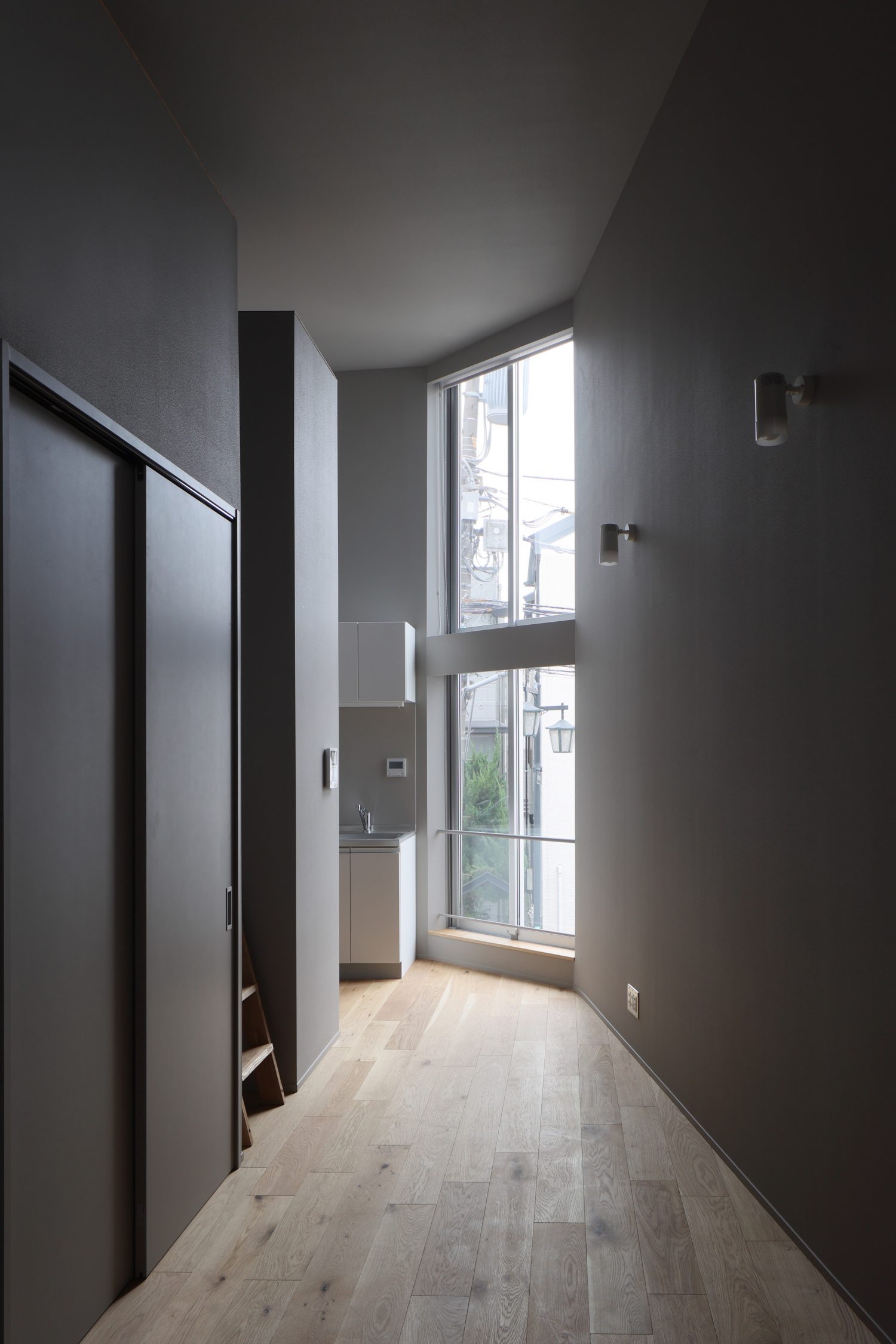
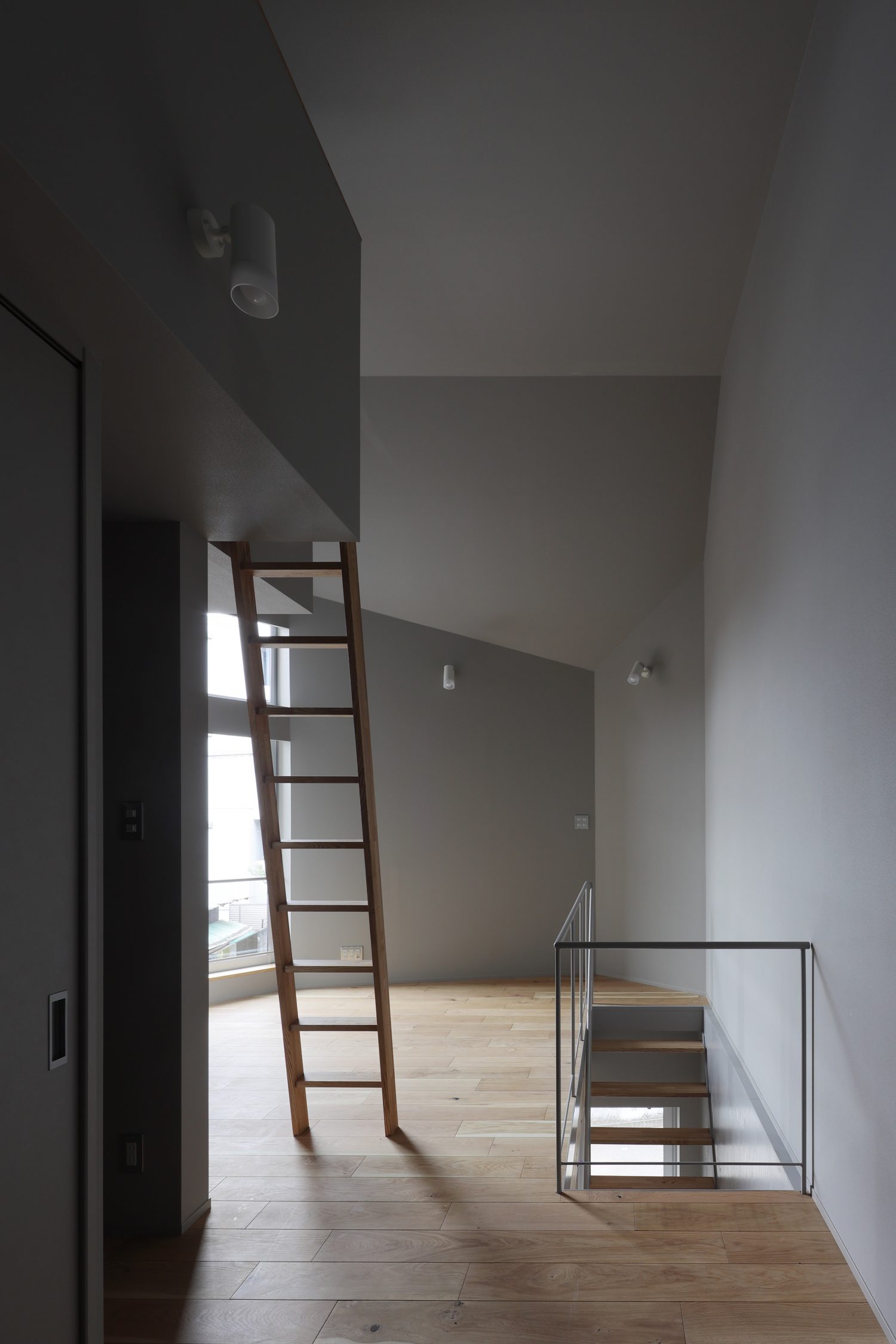
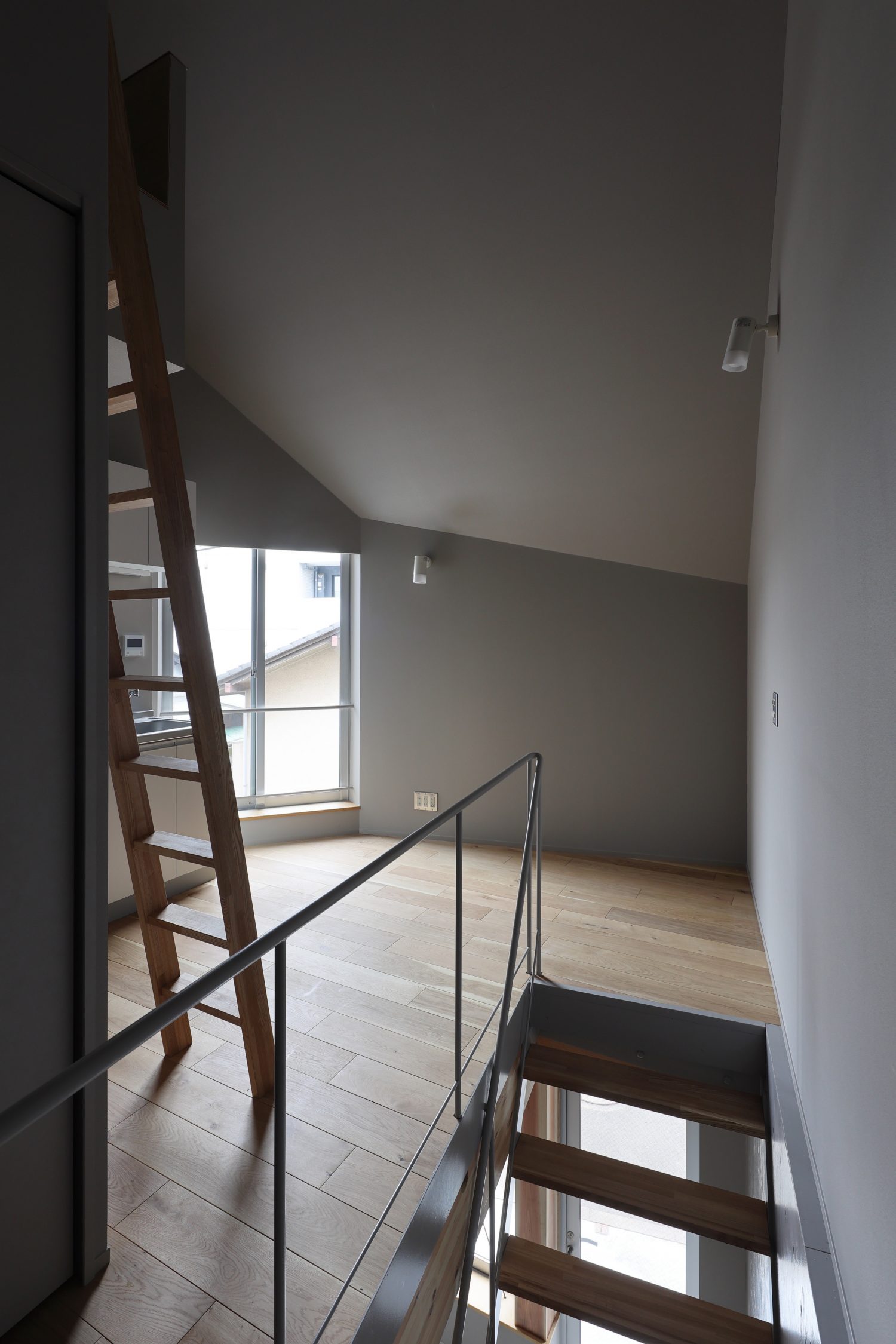
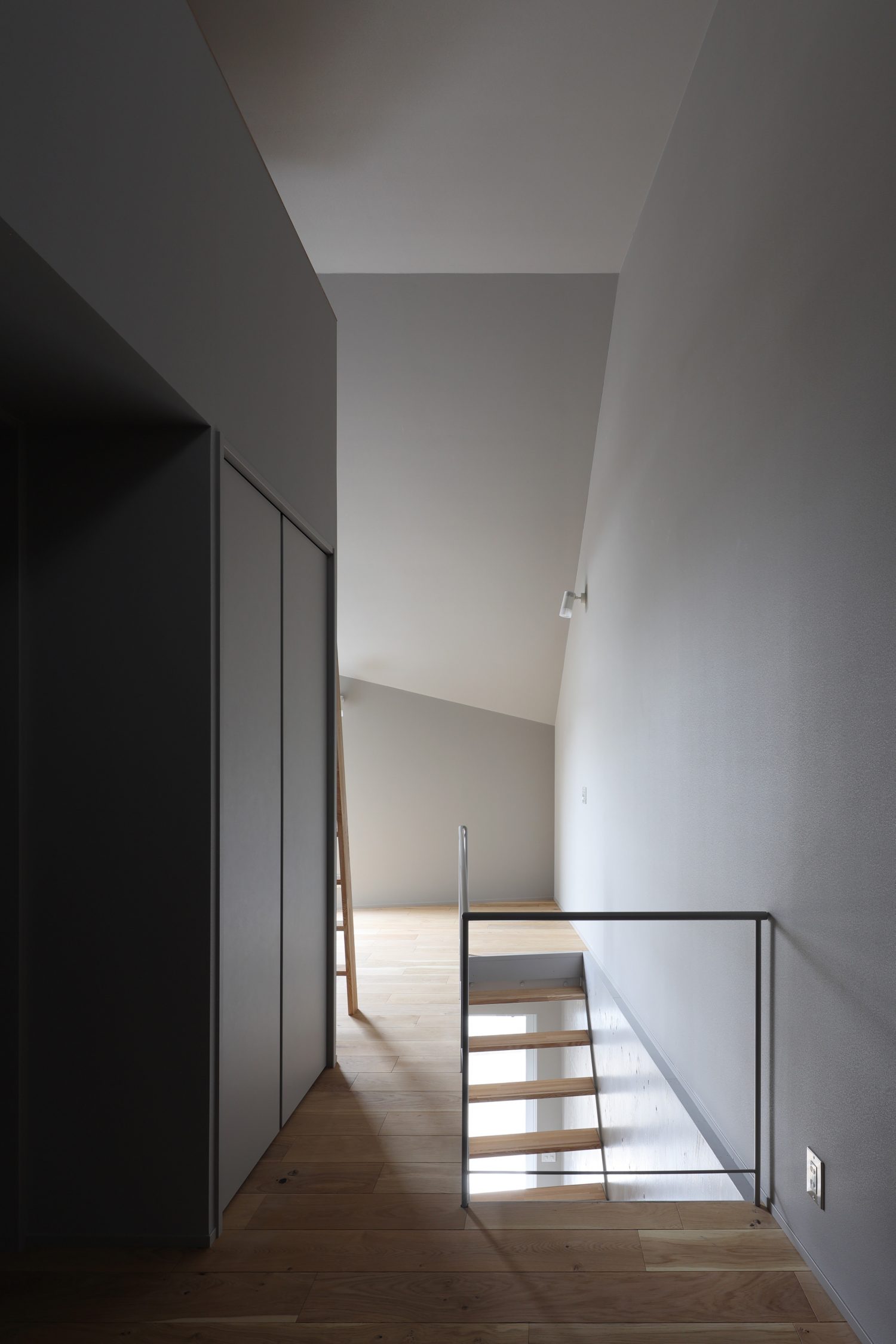
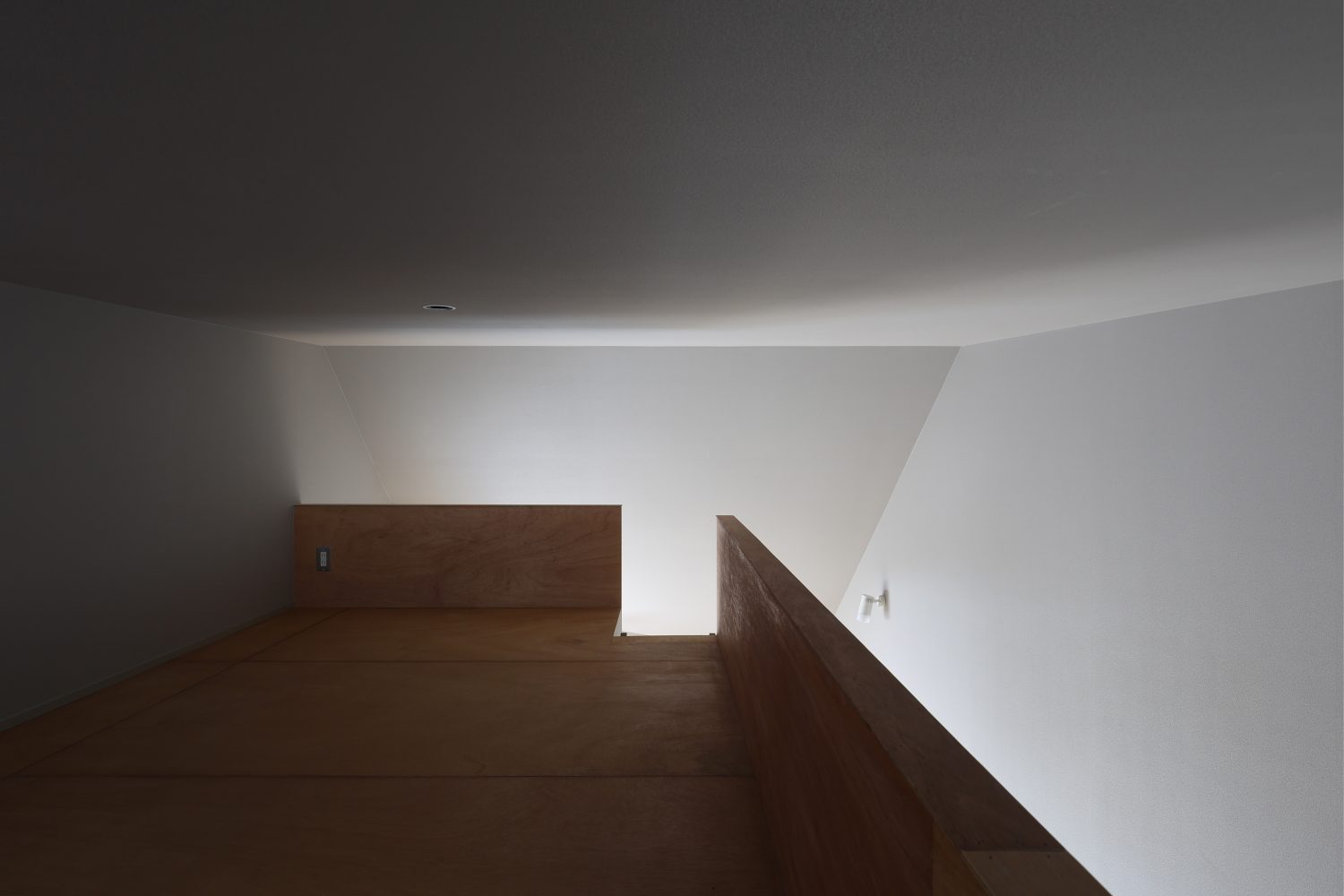
We also actively sought to create varied spatial qualities within the units by taking advantage of their two-story composition. On the first story, they have wall-to-wall openings that face the side street, setting up spaces for hosting dynamic activities under a sturdy framework of wood members that are oversized for fire resistance. To prevent the west-facing spaces of the second story from being used just for eating, sleeping, and storage, we recessed the windows into the building volume so that they can catch the sunlight from the morning hours while also creating more shadows on the façade. These windows allow light and air to fill the four-meter-high polygonal spaces, each equipped with lofts, without creating clear sightlines into or from neighboring homes. It may be going too far to call this a post-COVID-19 nagaya, but its two-story composition does match with the lifestyle choices of those who wish to switch on and off between work and home mode or create separate zones for each family member, and we feel that this is also clearly expressed on the façade.
By balancing the nagaya building type with contemporary requirements, here we searched for a form that does not force its residents to choose between using it as either a house or a shop, instead allowing them to cultivate a middle ground that capitalizes on the two-story composition. We are hopeful that we can renew more homes in this neighborhood and throughout Japan as we continue to develop neo-nagaya through our ongoing project.
Location:Hakuraku, Kanagawa, Japan
Category:Row house
Structure:Wood
Total floor area:181.03 m2
Design:Tsubame Architects (Takuto Sando, Motoo Chiba, Himari Saikawa, Momoko Sakanashi, and Keigo Hakozaki)
Real estate consultant: Around Architecture
Branding: Takubo Design Studio
Structure design:Kinoshita Structural Engineers
Equipment design:ZO Consulting Engineers
Construction:Sanryo Construction Firm
Client:Yamamuro
Completion:2022
photo:Kai Nakamura
published:Shinkenchiku, February 2023 issue